

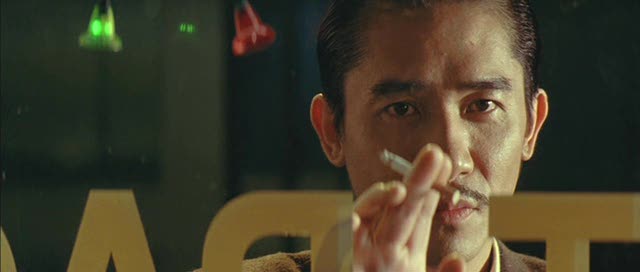
If my copy of 2046 were a paperback book, it'd be dog-eared, with a peeling spine. Can't get enough of Wong Kar-Wai at his filmmaking pinnacle. But in order to transition back to reality (gotta eat, gotta shave), I felt it necessary to detox. Can't sit around watching the same film for the rest of my life. So I got a hold of some methadone in the form of Wong's debut film, As Tears Go By (1988). This film is the perfect bridge between Wong's colorfast dream worlds and the desaturated one we live in. Watching it, you sense the young filmmaker contending with mundane commercial concerns while quickly finding his own crazy voice.
The film's first ten minutes reveal a familiar affinity for neon colors, electronic displays and quirky character introductions.
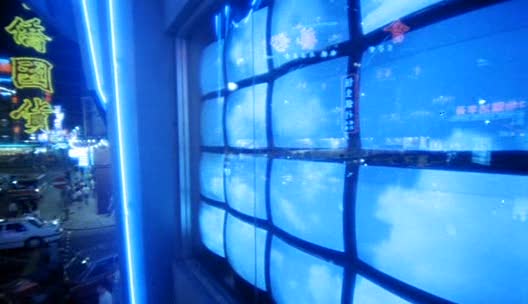
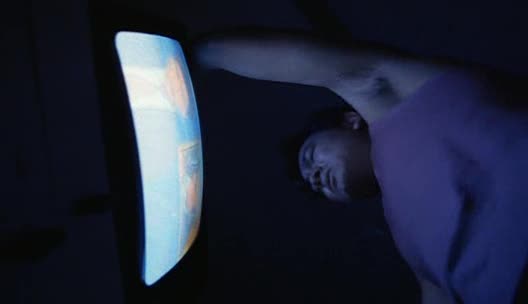
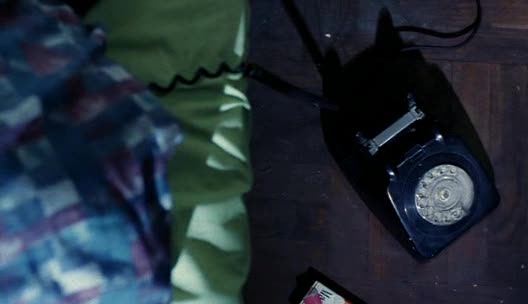
But for anyone who adores films like Chungking Express and Fallen Angels, something is missing. Yes, this is the only Wong Kar-Wai feature not shot, even in part, by Chris Doyle. Cinematographer Wai Keung Lau contributes the cool, crisp economy you'd expect from a guy who went on to shoot actioners like Infernal Affairs. Of course, William Chang, production designer on all Wong's films, is present, but even his work here is nowhere near as bold and extravagant as it would soon get.
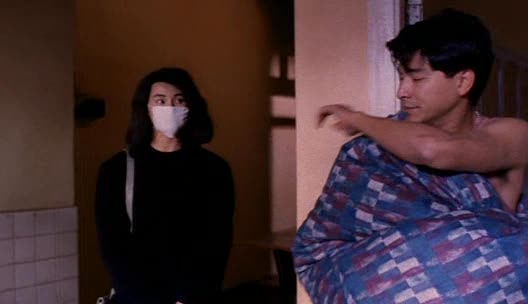
The first act of As Tears Go By sets up an agreeable meet cute between low-level, chain-smoking gangster Wah (Andy Lau) and his adorable distant cousin-by-marriage, Ngor (Maggie Cheung). Wah also looks after his volatile little buddy, Fly (comical Jackie Chan sorta-lookalike Jacky Cheung), in an underworld version of the Big Brother program.

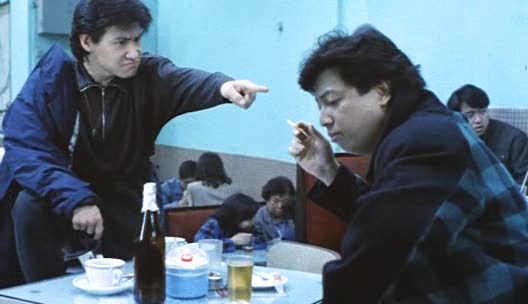
Not to be one of those Westerners who think everything is a reference to Ho'wood, but the Wah-Fly relationship rings a bell.
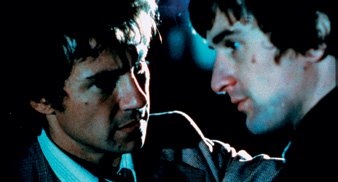
Anyway, after making a bold visual declaration...
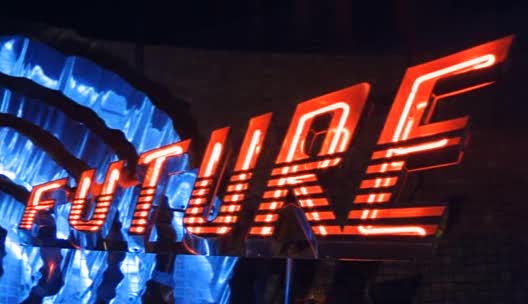 Wong gets down to the business of color.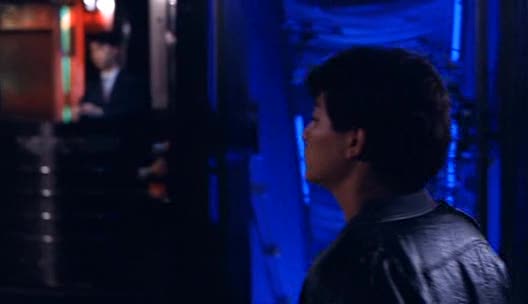

Establishing a doomed relationship between Wah and his long-suffering girlfriend, Wong uses garish club lighting to do what it always does in his films, commiserate with his heartbroken characters.

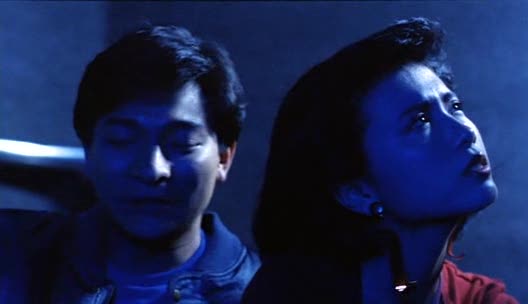
Still, this isn't yet a Wong Kar-Wai picture. Within the first few minutes of Chungking Express or In the Mood for Love, there are ecstatic visual incidents that make someone attempting to describe them sound like a drunken Werner Herzog. No such sublimity here, only scattered hints of it. Wong maintains an almost businesslike pace, no lingering on the grace notes.
18 Minutes into the film, something happens. Kurosawa's cinematic coming-out was the frenetic jazz club scene in Drunken Angel. Quentin Tarantino's was the 70-second street chase in Reservoir Dogs. In As Tears Go By, the gauntlet is a pool hall scene that begins as a mildly impressive series of Color of Money shots. Smoke and tough talk as the camera glides along with scattering billiard balls. Fly instigates a fight, which Wong covers in a series of awkwardly static compositions you'd expect in an old cowboy serial. But when the brawl gives way to a chase, Wong suddenly starts to soar.
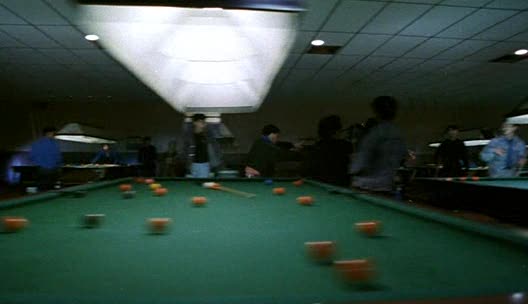
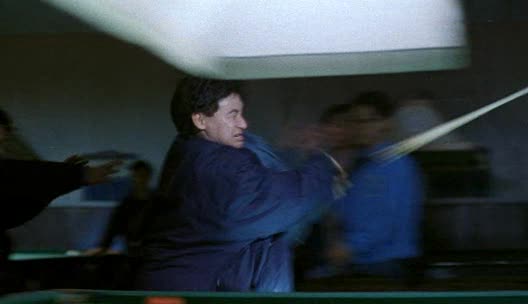
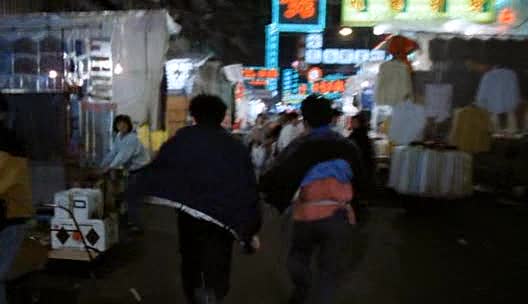

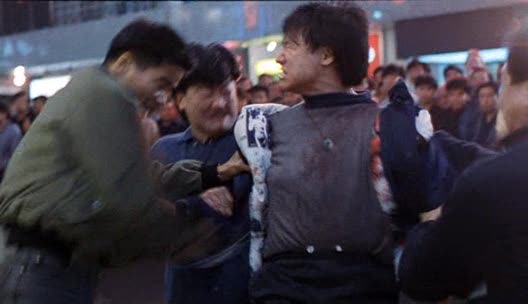
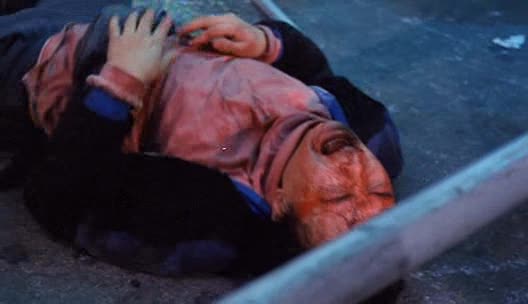
The chase spills out onto the street, where a brawl covered from what seems like 20 different angles draws a crowd of hundreds. It's a chaotic, kinetic moment that the carefully composed exposition didn't prepare us for.
Now having issued proper warning, Wong and Chang unleash an even more stunning piece of design, arguably their first bravura sequence. Wah seeks retaliation in a gangster's hangout of translucent tarp and wall-to-wall fluorescent tubes. The sequence is a riot of steel blues, greens, splashing water, sparks and urban grunge. It is also the first instance of Wong's trademark shutter-streaks.
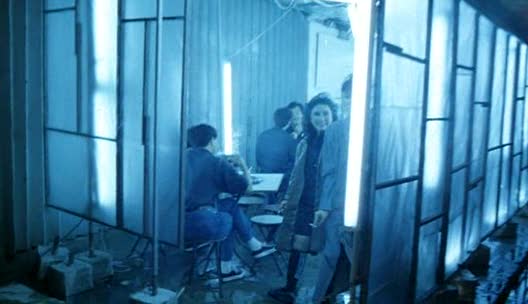

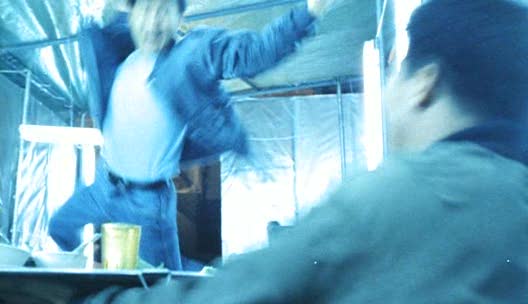
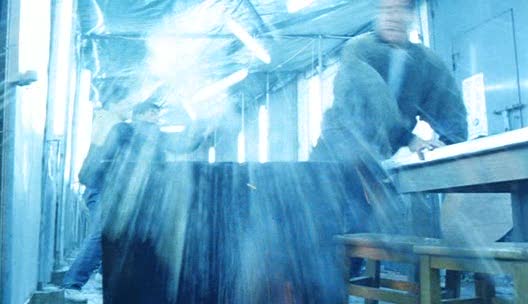
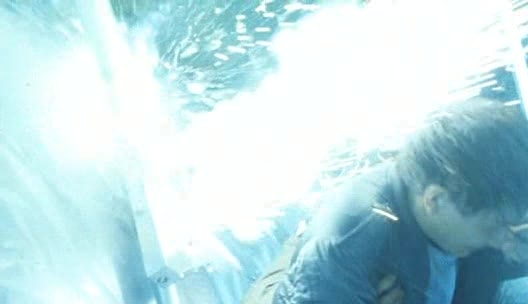
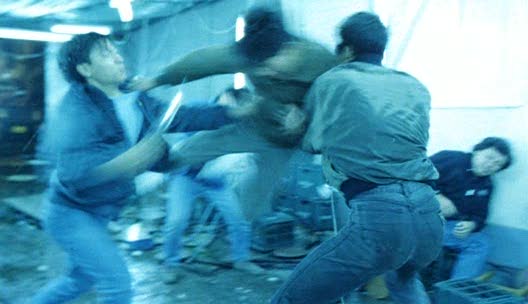
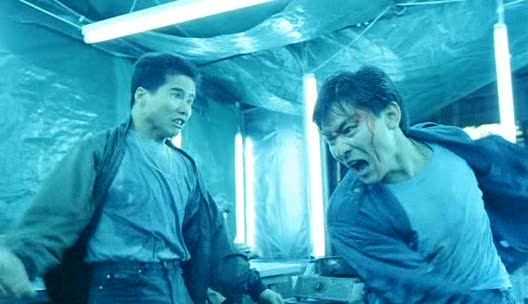

The scene is bookended with a slo-mo shot that looks suspiciously like something from Chungking Express.
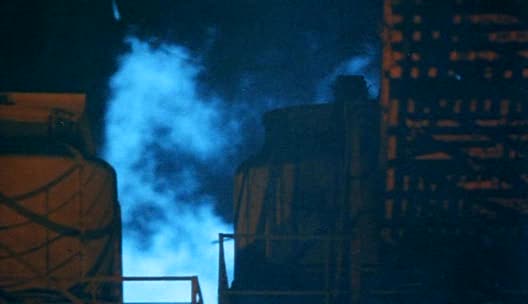
To paraphrase Jules Winnfield, a whole lotta gangster shit happens after that, Wah and Ngor do their star-crossed thing, and Fly's motor mouth keeps almost getting him killed. In this film, Wong dutifully adheres to genre codes and bylaws, if only to master a language he will soon enough subvert and beautify. By the time he got to Fallen Angels, the gangster shit had faded into half-remembered snatches of violence. The blurs, refractions and reflections had taken over. Time, memory and love became his stars.
Still, had he gone another way, Wong could've been a serious John Woo/Ringo Lam contender. As Tears Go By has some explosive confrontations, framed like your favorite comic book.


Days of Being Wild (1990) is known as the first truly personal Wong Kar-Wai film, but if you don't blink, you'll catch some firsts in this one as well.
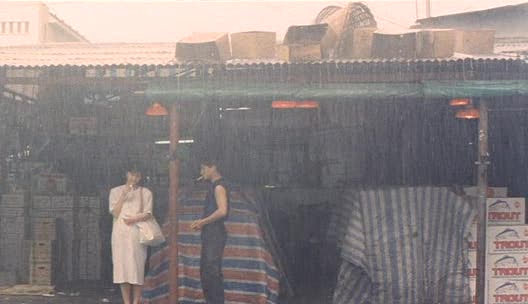
First long shot of two lovers or would-be lovers standing in silence together for a brief moment attenuated into an eternity:
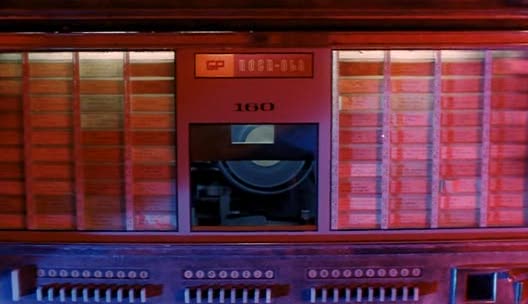
First jukebox shot:
First wistful airplane/travel metaphor:

First use of a doorway to emphasize the emotional/social barriers between lovers:
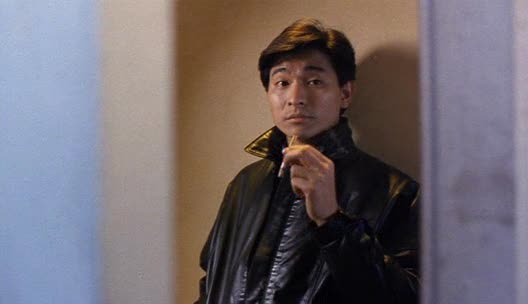
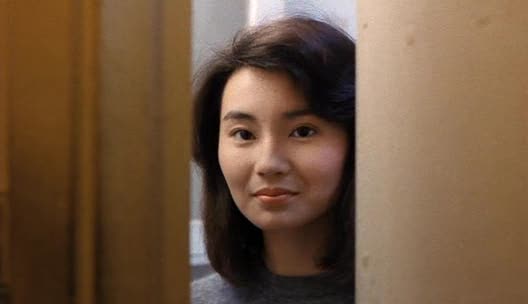
Last and least, a cover of Berlin's "Take My Breath Away" counts as Wong's first use of a Western pop tune for a sense of breezy romance. But this Top Gun power ballad doesn't work the same magic as "California Dreaming" did in Chungking Express.
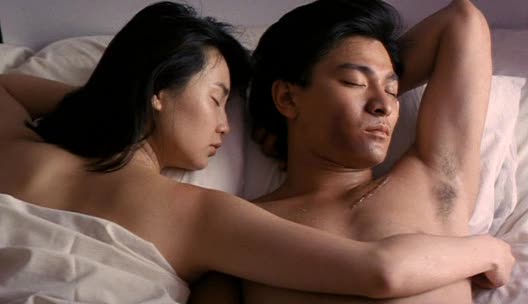
Wong is being born as a great filmmaker in As Tears Go By, and stumbling across the motifs that would have more impact and certainty in his later films is retroactively touching. Few filmmakers have captured tender, unpredictable exchanges between lovers as accurately as Wong. Just when As Tears Go By seems too preoccupied with genre tropes to indulge such a detour, Wong gives us a lovely glimpse of his future: A somber morning-after talk veers into a wild playfight. The garish neon is gone; pure natural light graces the reverie:
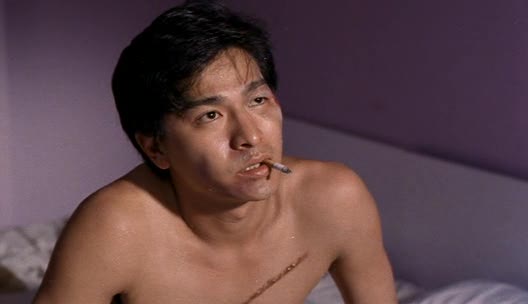
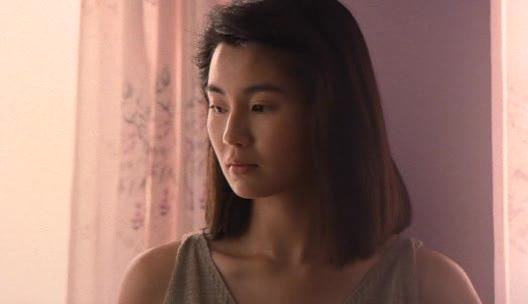


Then, out of nowhere, Wong drags onstage his most darkly glamorous co-star, Time. As the lovers feast on the beautiful moment, ice melts back into water.

(The canned goods in Chungking, the rusty doorknob and tin cash box in 2046... Wong can make ordinary household items cry. Sorcery.)
The romance is doomed, of course, little do they know.
 Or do they?
When lovers part "for good" in Wong's films, he does something strange with the editing. In In the Mood for Love, Chow and Su Li-zhen part in a series of near-subliminal dissolves between sharply opposing angles on the same action. The delay made you ache, want to reach into the screen and force the couple back together. The idea is to express loss with the same visceral impact that, say, George Romero brings to shots of zombies getting their heads blown off. In As Tears Go By a bright red bus goes round and round a desolate circular lot, teasingly spinning Wah around Ngor before taking him away forever.

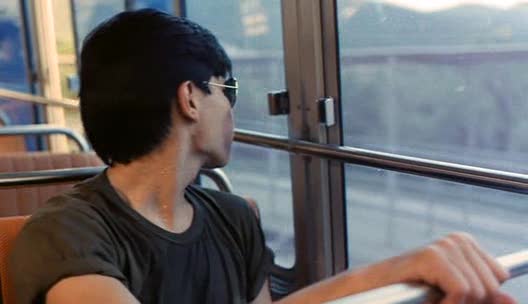
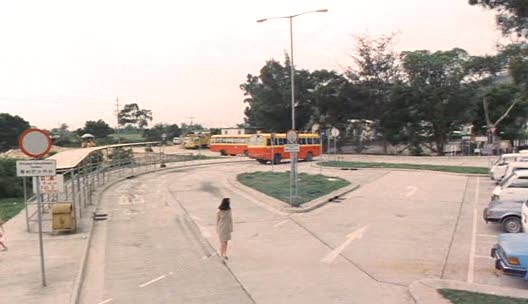
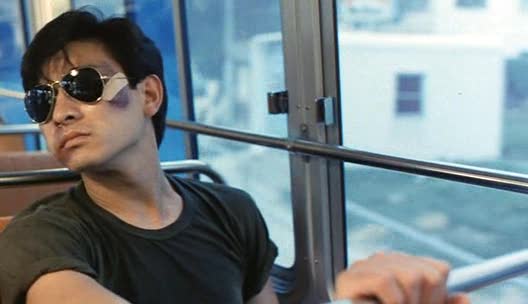
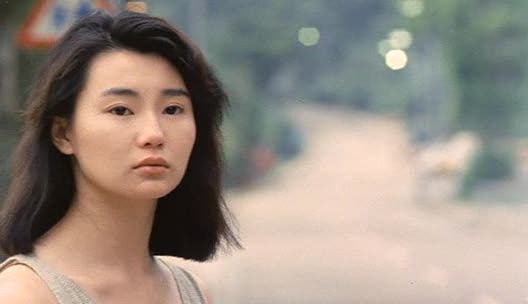
Dede Allen cut the final massacre in Bonnie and Clyde only slightly faster than this barrage of glances, turns and spins.
As for this film's own blaze-of-glory finale, Wah and Fly go out in the typical fashion. Nothing extraordinary, aside from Wong's patented shutter tricks.


Finally, a flash cut flashback of Wah and Ngor kissing just before fading out on Wah as he lay dying.
The tears go by very quickly in Wong's calling card picture, but despite the box office success playing it fast and furious garnered him (the film was a smash in Hong Kong), the filmmaker went on to make increasingly languorous, daydreamy explorations of his pet themes. Christopher Doyle brought his improvisatory, handheld funk to the mix (a fish-eye lens here, a ballpark telephoto there, always in tune with a character's mood). Chang put up ever more mouldering urban clutter, chintzy/elegant surfaces and constricting costumes between Wong's struggling couples. And Wong demonstrated that the best way to trap the sorrows of evanescence on celluloid--to keep the ice from melting--is to do to time what time does to us.

